Strait of Hormuz Insurance Crisis – Implications and Options for India
An analytical piece on the happenings at the Strait of Hormuz and the varied implications for India.
Background
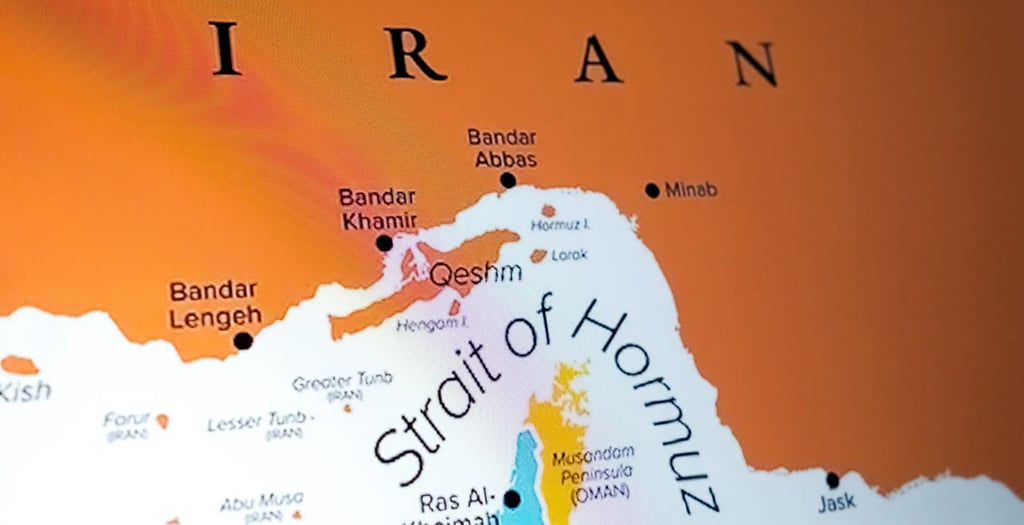
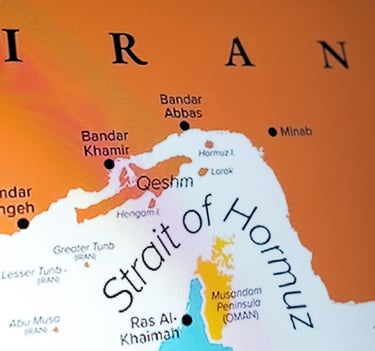
Nearly half of India’s crude oil imports—around 2.5–2.7 million barrels per day—normally transit the Strait of Hormuz, alongside a large share of LNG and most LPG imports from the Gulf. India imports about 88 per cent of its crude needs, so disruptions at Hormuz directly threaten fuel prices, LPG availability and overall energy security. The effective shutdown of tanker traffic following the withdrawal/curtailment of war risk cover by major international marine insurers has turned a security crisis into a financial blockade of the route.
India’s Exposure and Current Mitigation
Crude oil: Around 50 per cent of India’s crude imports use the Hormuz corridor, primarily from Iraq, Saudi Arabia, UAE and Kuwait, though the government has rapidly increased Russian and non-Hormuz sourced crude to reduce this share.
Gas and LPG: Roughly 60 per cent of LNG and 80–85 per cent of LPG imports are Gulflinked, with limited strategic reserves for LPG, making this the sharpest vulnerability for households.
Insurance leverage: India does not host any member of the International Group of P&I Clubs; its tankers and cargoes rely on foreign insurers and reinsurers whose withdrawal of war risk cover can immobilise Indian-linked shipping even without physical interdiction.
Developments on Insurance Cover
War risk premiums for Gulf transits have surged from fractions of a per cent of hull value to levels that make voyages uneconomic; in some cases, insurers have refused to quote or have cancelled cover for Hormuz entirely.
India has opened discussions with the United States on a proposed insurance mechanism backed by the US International Development Finance Corporation to restore cover or provide guarantees for ships passing through Hormuz. The Petroleum Ministry states that about 70 per cent of crude is now secured from outside Hormuz, but this diversification does not fully address LNG and LPG exposure or the structural dependence on foreign insurance systems.
Why This Is a Strategic Issue for India
Marine insurance has become a strategic choke‑point comparable to the Strait itself; foreign risk appetite now partly determines whether Indian energy cargoes can sail, regardless of naval protection.
The crisis highlights a long‑standing vulnerability: India’s 7,500‑km coastline and growing merchant fleet are effectively underwritten by insurance and reinsurance decisions taken in London and other foreign financial centres.
As seen in the Hormuz disruption, weaponisation of insurance can complement sanctions or military pressure, constraining India’s strategic autonomy in energy sourcing and maritime trade.
Recommended Actions for the Government of India
1. Secure Short-Term Cover for Essential Energy Flows
Conclude arrangements with the US and other partners on temporary war risk backstops or guarantees specifically covering ships carrying Indian crude, LNG and LPG through Hormuz.
Prioritise insurance support for vessels carrying LPG and critical LNG cargoes, given limited buffers and high domestic sensitivity.
2. Develop an Indian/Regional WarRisk Facility
Mandate a feasibility study by IRDAI, GIC Re and major Indian insurers on setting up an India-anchored war risk pool that can coinsure or reinsure voyages involving Indian cargoes and flag, at least for limited tonnage.
Explore a regional mechanism with like-minded Asian importers (Japan, South Korea, ASEAN partners) to share risk, similar to historical arrangements that kept traffic moving during the 1980s “Tanker War”.
3. Deepen Energy Diversification and Stockpiling
Accelerate diversification away from Hormuz-dependent crude by locking in longer-term contracts with Russia, Africa, the Americas and non-Hormuz Middle Eastern routes, building on recent gains in Russian imports.
Expand strategic petroleum reserves and develop targeted strategic LPG and LNG buffers to cover at least several weeks of disruption.
4. Strengthen Maritime and Diplomatic Risk Management
Coordinate closely with the Indian Navy on convoy options, route risk assessment and signalling, even if insurance remains the binding constraint, to reassure Indian and foreign shipowners carrying Indian cargoes.
Use diplomatic channels with Gulf producers and Iran to seek explicit assurances for Indian-flag and Indian cargo vessels, which can support insurers’ risk assessments and facilitate partial restoration of cover.
5. Build Long-Term Financial Resilience
Encourage Indian financial institutions to gradually increase participation in marine and political risk insurance, including through joint ventures with global P&I and speciality insurers, to reduce overdependence on a single external system.
Integrate maritime insurance vulnerabilities into India’s broader national security and energy security planning, including regular stress tests for Hormuz-type chokepoint disruptions.
Conclusion
For India, the Hormuz crisis demonstrates that control over energy lifelines now depends as much on insurance contracts as on sea lanes. Ensuring reliable access to marine war risk cover—through international arrangements and indigenous capacity—must become a central pillar of India’s energy and maritime security strategy.